Styling Tips
Expert advice for creating beautiful indoor plant displays
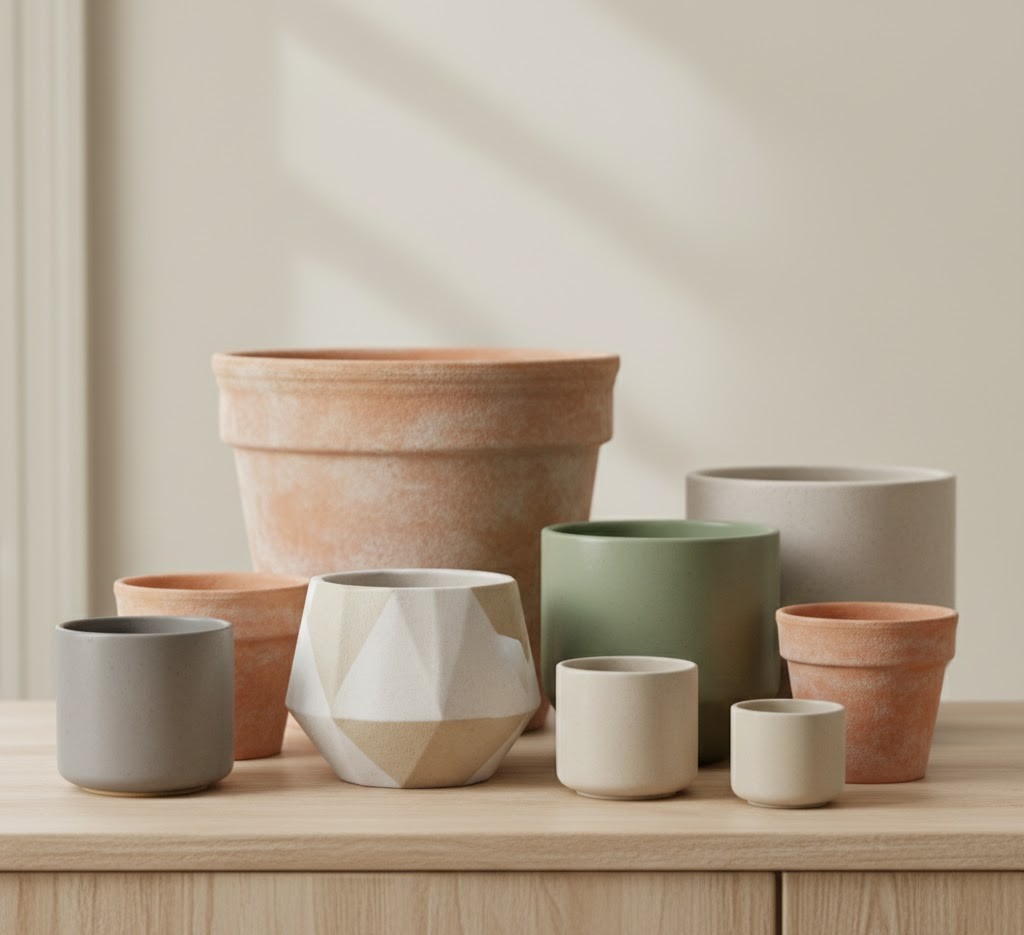
Choosing the Right Containers
Select containers that complement your existing decor while ensuring proper drainage. Ceramic pots offer elegance and come in various colors that can match your color scheme. Terracotta provides natural warmth and excellent breathability for plant roots.
Modern geometric planters add contemporary flair and work well in minimalist spaces. Always ensure containers have drainage holes or use a layer of gravel at the bottom to prevent waterlogging. Match container sizes to your plants—too large can lead to overwatering, too small restricts growth.
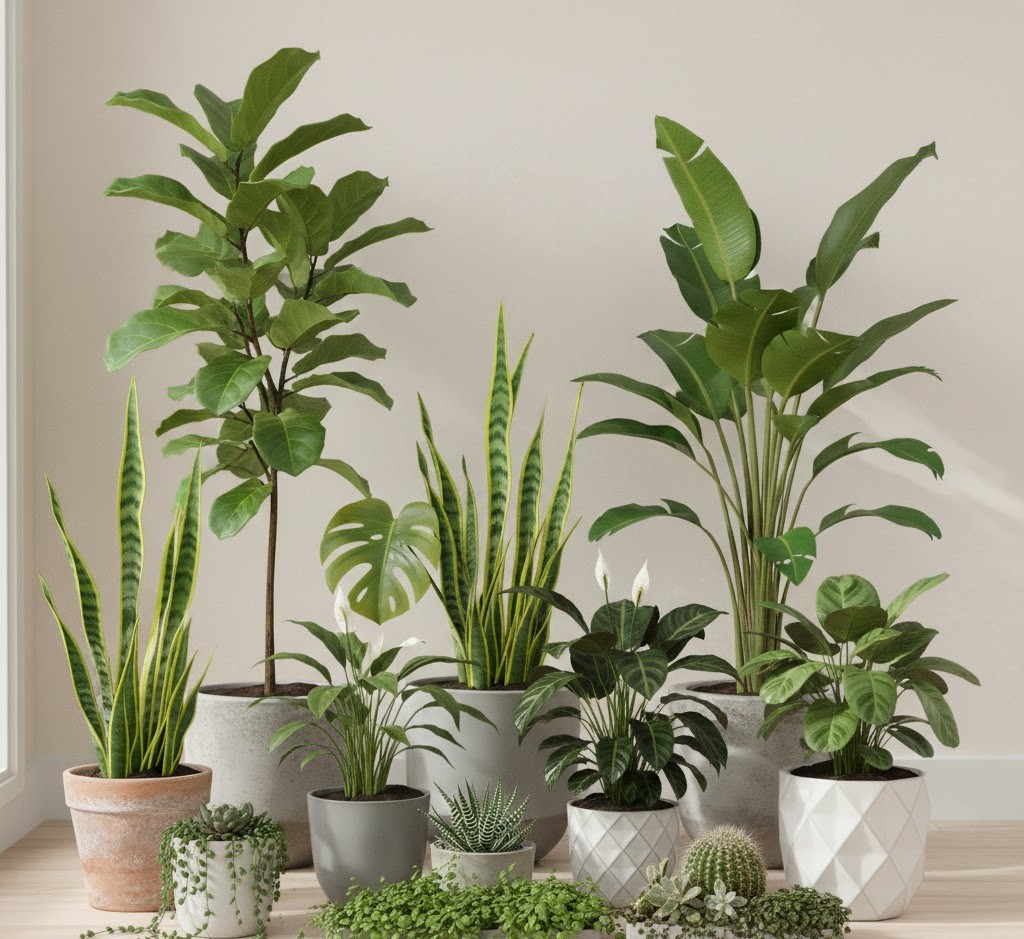
Creating Visual Depth
Layer plants by height to create visual interest and depth. Place taller specimens in the background or corners, medium-height plants in the middle ground, and low-growing varieties in the foreground. This technique works especially well on shelves, plant stands, or grouped floor arrangements.
Mix different leaf textures and shapes—combine broad leaves with narrow ones, glossy surfaces with matte finishes, and variegated patterns with solid colors. This variety creates a more dynamic and visually appealing display that draws the eye naturally through the arrangement.
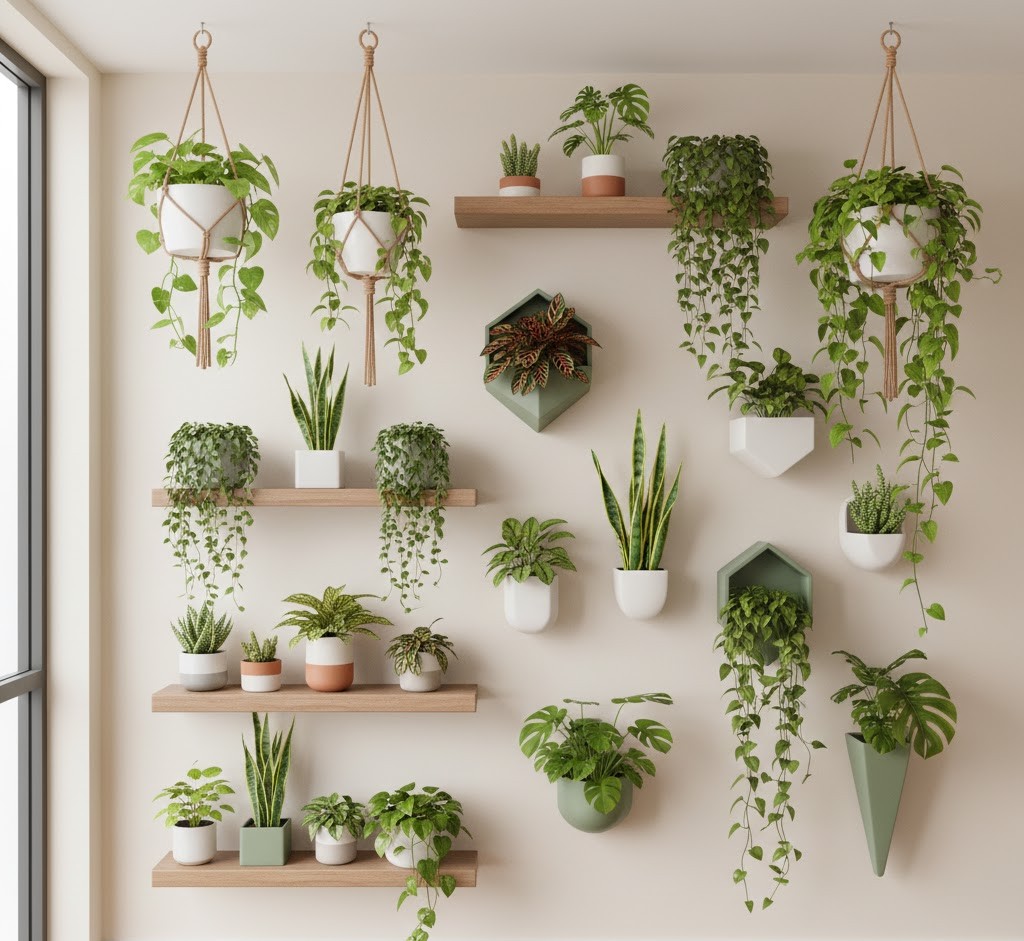
Maximizing Vertical Space
When floor space is limited, look upward. Install floating shelves at different heights to create a vertical garden effect. Use wall-mounted planters for trailing varieties like pothos or ivy. Consider ceiling hooks for hanging baskets that don't require wall space.
Plant stands and ladder shelves allow you to display multiple plants in a small footprint. Window sills are prime real estate for smaller plants that need bright light. Even the space above cabinets can accommodate low-light varieties that add greenery to overlooked areas.
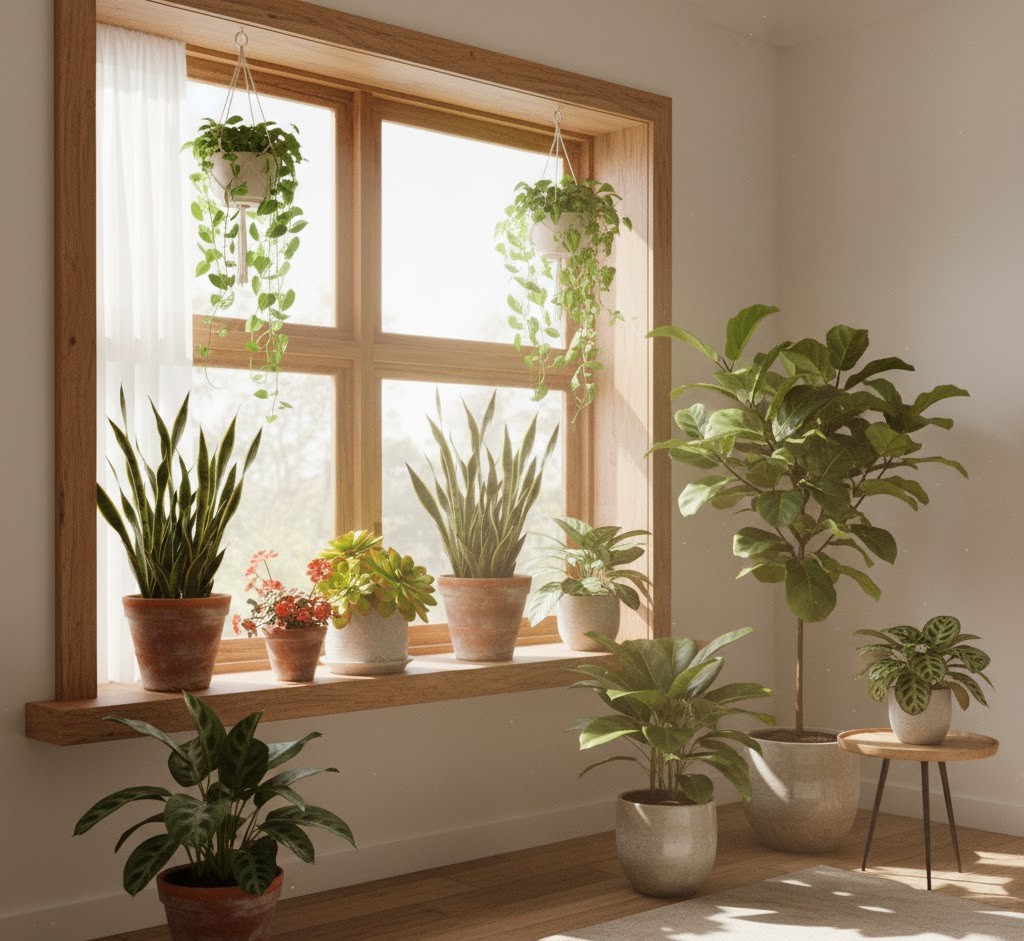
Understanding Light Requirements
Position plants according to their light needs. South-facing windows provide bright, direct light suitable for sun-loving plants. East and west windows offer moderate light perfect for most houseplants. North-facing windows supply gentle ambient light ideal for low-light varieties.
Most indoor plants prefer to avoid direct midday sun, which can scorch leaves. Use sheer curtains to filter intense sunlight. Rotate plants regularly to ensure even growth on all sides. Don't hesitate to move plants seasonally as light patterns change throughout the year.
Maintenance Essentials
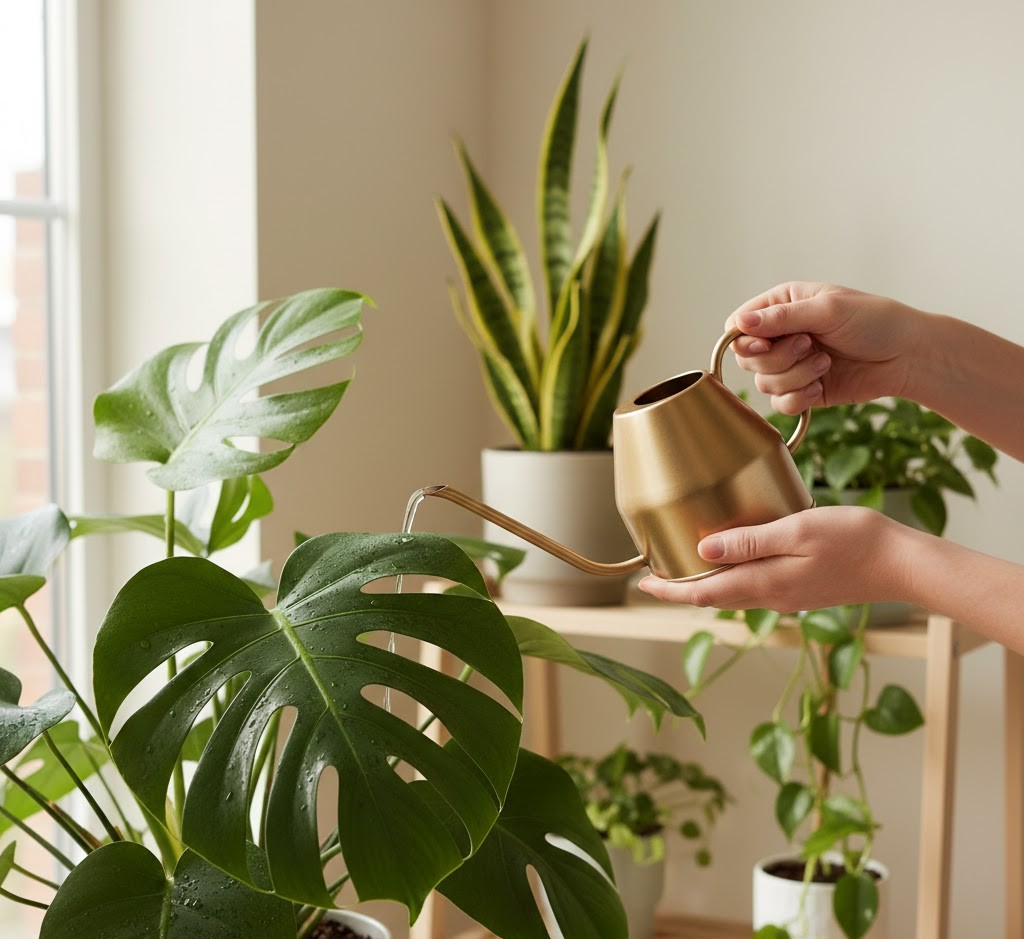
Check soil moisture by inserting your finger about an inch deep—water only when the soil feels dry. Most houseplants prefer thorough watering followed by complete drainage, rather than frequent light sprinkling. Overwatering is the most common mistake, so when in doubt, wait a day or two.
During growing seasons, feed plants monthly with a balanced liquid fertilizer diluted to half strength. Dust leaves gently with a soft cloth to maintain their ability to photosynthesize efficiently. Prune dead or yellowing leaves promptly to keep plants healthy and attractive.